


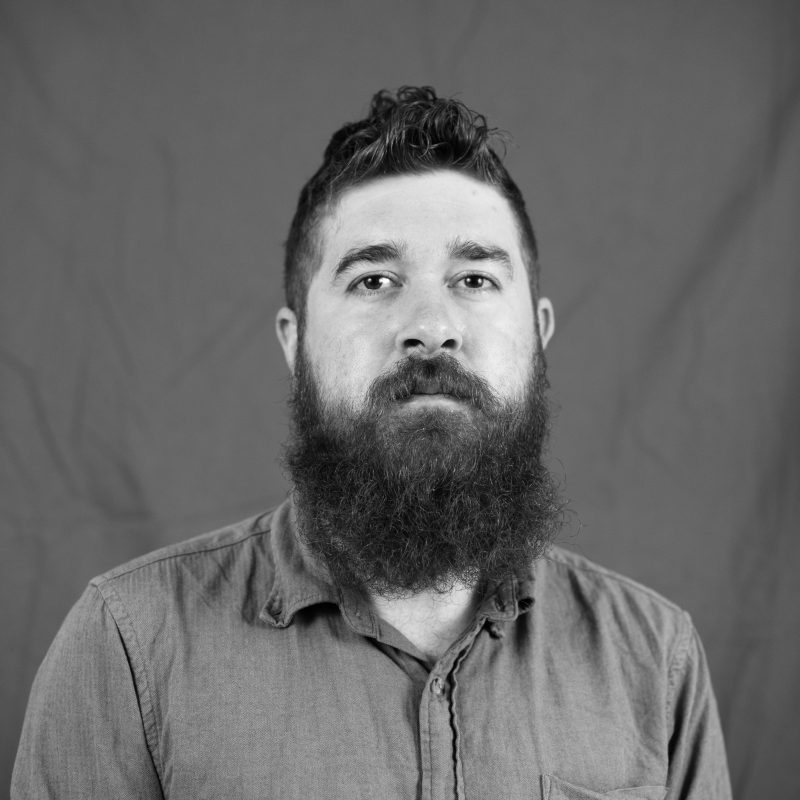
Shaun Rosier
' fill='%23ffffff'/%3E%3C/svg%3E%0A)
Education
PhD. in Landscape Architecture, Victoria University of Wellington, New Zealand.
PGDip. in Landscape Architecture, Victoria University of Wellington, New Zealand.
BAS. in Landscape Architecture, Victoria University of Wellington, New Zealand.
Shaun Rosier is a futurist, and a landscape architectural and urban designer originally from Wellington, New Zealand. He previously taught at Victoria University of Wellington’s Landscape Architecture Programme, where he also received a Practice-based PhD in Landscape Architecture.
His primary creative practice, research, and teaching interests revolve around interrogating how landscape architectural design works through developing fieldwork, drawing, and design methods that empower designers to deal with the complexity of land. This work is grounded in the philosophies of Gilles Deleuze and Felix Guattari, particularly their notions of affect and assemblage, alongside Alfred North Whitehead, and contemporary New Materialist thinking. Through this, Shaun interrogates the nature of landscape architectural design itself, developing methods and techniques to allow a closer connection to the capacities and possibilities of individual sites and landscape problems. This pushes his studio investigations to being intensely site-focused, focusing on how embodied encounters with sites shape other problem-solving aspects of the design process.
Shaun’s current design research projects are investigating the future of several urban aggregate quarries in northern Virginia through a Place Based Scenario Planning methodology. This work aims to shift landscape architectural design significantly earlier into a quarry’s lifespan so that reclamation isn’t the closing phase but rather an unfolding act throughout the life-of-mine. This futures-based project aims to develop design techniques to facilitate working with the inherent uncertainties of quarrying as well as using landscape design to facilitate dialogue between communities and quarry operators on what the future of these sites will be earlier in the process.
This expertise and interest in mining has been put to use in an interdisciplinary team that collaborates with the community of Amonate – a former coal mining community in southwest Virginia. This project has seen over $80,000 funding directed to environmental and community resource assessment, remediation works on historically significant buildings, LiDAR documentation of significant buildings and landscapes, and community capacity building. Alongside these localised efforts, Amonate’s story has been shared in national and international conferences, and through a documentary that captures the oral histories present here.
His other work focuses on developing a contemporary approach to environmental or landscape spirituality, interrogating how Western socio-cultures can reconnect with the liveliness and vitality of more-than-human entities and material. Building on indigenous understandings of immanent environmental divinity, alongside contemporary pagan, wiccan, and other magic-oriented practices, this work aims to reframe how landscape architectural design can help reconnect Western thinking and practice to the world rather than continuously extracting from it.
Landscape Aesthetics, Human-Environment Relationships, Landscape Representation, Fieldwork, Quarry Reclamation, Futures Thinking, Digital Design and Landscape Documentation, Practice-Based/Creative Practice Research.
LAR 1014 Landscape Architecture Foundation Design Lab
LAR 1264 Seeing, Understanding, and Representing Landscape and Built Environments
LAR 2164 Landform Aesthetics and Function
LAR 4134 Landscape Representation